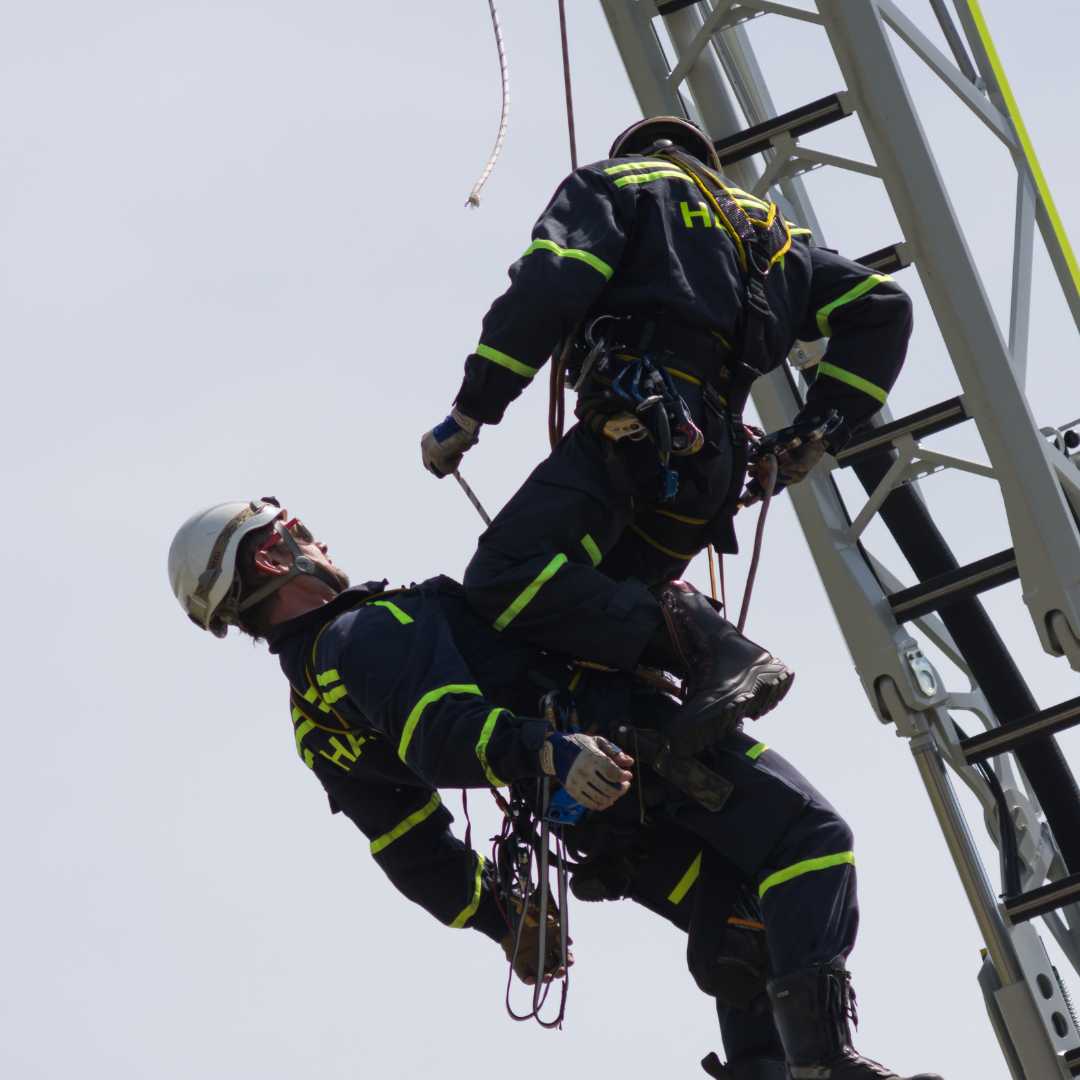
High angle rescue refers to the specialized techniques and procedures used to safely rescue individuals who are stranded or injured in high or steep locations, such as cliffs, towers, bridges, or buildings. These situations often involve vertical or near-vertical environments, requiring rescuers to navigate and operate at significant heights.
Key aspects of high angle rescue include:
1. Risk Assessment: Rescuers conduct a thorough risk assessment of the rescue site, evaluating factors such as the height, stability, and accessibility of the location. They identify potential hazards, such as falling debris, unstable surfaces, or adverse weather conditions, and develop a plan accordingly.
2. Rope Systems and Equipment: High angle rescue relies heavily on the use of ropes, harnesses, and specialized equipment to secure and transport both rescuers and victims. Rescuers are trained in technical rope work and rigging systems to establish safe anchor points, belays, and hauling systems.
3. Personal Protective Equipment (PPE): Rescuers wear appropriate personal protective equipment, including helmets, harnesses, gloves, and safety clothing, to protect themselves from falling objects, abrasions, or other hazards associated with high angle environments.
4. Vertical Access and Egress: Rescuers employ various techniques to access and extract individuals in high angle situations. These methods may include ascending or descending ropes, using ladders or mechanical devices, or utilizing aerial platforms or helicopters, depending on the specific circumstances and available resources.
5. Patient Stabilization and Medical Care: Once access is established, rescuers provide necessary medical care and stabilize the injured or stranded individuals. They may immobilize fractures, administer first aid, or provide life-saving interventions, depending on the victim's condition.
6. Evacuation: Rescuers carefully evacuate the victims using appropriate techniques, such as lowering or raising systems, aerial lifts, or other specialized equipment. They ensure a controlled descent or ascent, taking into consideration the victim's condition and the challenges posed by the environment.
High angle rescue operations require specialized training, equipment, and expertise to ensure the safety of both rescuers and victims. These operations often involve close coordination among multiple rescue teams, such as rope rescue technicians, paramedics, and incident command personnel.
Effective high angle rescue relies on efficient communication, precise technical skills, and the ability to adapt to changing conditions. It emphasizes risk management, meticulous planning, and the use of safety protocols to mitigate potential hazards and achieve successful outcomes in challenging vertical environments.